Last yr I installed Unraid on my NAS in addition to Sonarr/Radarr/Deluge. This setup helped me automatically download and manage my media content. Read more than virtually how I ready information technology up here.
Recently, I was surfing the web and discovered Usenets. To me, Usenets were a new, unlike method to download media content! I decided to weigh up the pros and cons of torrents and Usenets by giving Usenets a go!
NOTE: this article assumes you've already prepare Unraid/Sonarr/Radarr, follow the higher up article if you lot oasis't.
Torrent Setup
Yous probably know what torrents are and how they work. If not, read more here.
A typical torrent setup using Sonarr/Radarr might work equally follows:
- Use Sonarr/Radarr to select a media file to download
- Sonarr/Radarr communicates with torrent indexers
- Sonarr/Radarr adds the torrent file to Drench and kicks off the download
- Deluge downloads the content and in one case complete, volition copy the file over to a completed directory
- Sonarr/Radarr detects the file has been complete, renames and copies the file to the appropriate media directory used by Plex
My take on the pros and cons of using torrents are:
| + | Torrenting is costless. It doesn't require any paid subscriptions to any services for you to download your content! |
| + | Setup and configuration to employ Torrents is simple and tin exist automated! |
| + | Torrents are well known method of downloading content. More people know about torrents and have a bones understanding of how they work already. |
| - | Torrents rely on seeders. Low corporeality of seeders will result in slow download speeds. |
| - | Seeding is normally required while/before downloading |
| - | Torrents can have malicious or low quality files. Although, this largely depends on the indexers you utilise and I've personally found this to be very rare if you ignore all .exe files |
Usenet Setup
Usenet has a lot of history behind it. In summary, it were originally designed equally a bulletin-board service. Usenet somewhen became a popular place to store and sort any kind of file. An organisation called Newzbin created the NZB file which pointed to where files existed on the Usenet. A whole ecosystem around Usenet and the NZB file then grew until information technology became what it is today. Usenets are different to torrents in that files are downloaded from a single server, every bit opposed to from other multiple other "peers" similar you do in Torrents.
Read more than nearly the history of Usenets and how they work here.
An automatic Usenet download period would work as follows:
- Apply Sonarr/Radarr to select a file or await for a file to be released
- Sonarr/Radarr communicates with a Usenet Indexer to find a matching file
- Using the alphabetize, Sonarr/Radarr sends the file location to a Usenet Downloader
- The Usenet Downloader communicates with a Usenet Provider which serves the content to the downloader
- Once the download is consummate, information technology will re-create the file to a completed directory
- Sonarr/Radarr detects the file has been complete, renames and copies the file to the appropriate media directory
My take on the pros and cons of Usenets are:
| + | Usenets providers provide unlimited download speeds. You are only limited by your network |
| + | Well-nigh Usenets providers take SSL ports so no one can snoop on what y'all are downloading and your IP address is kept private |
| + | Usenet providers, indexers and downloaders all take a large amount of support, documentation and automation functionality available as well as having large, active communities supporting them |
| + | Don't have to seed (upload) before/while downloading |
| - | To use Usenets, you need a subscription to a Usenet provider and indxer service. These subscription costs money |
| - | Usenets are a less popular, unfamiliar, unknown alternative to torrenting. At that place may be some anticipation in using Usenets for these reasons (new things can be scary) |
In both approaches, there are positives and negatives. As previously mentioned, I decided to give Usenets a become to run into if I would like them better than torrents.
Before we get started, nosotros'll need to pick a provider and an indexer to use. At that place are many indexers and providers out there, I'll just be suggesting a few of them. I would encourage you to exercise your own research as well.
Recommended Usenet Providers
Newshosting (Harvey'southward Recommendation)

Newshosting is my personal pick and what I'll be using for the article. Newshosting is one of the most pop Usenet providers out there (and for good reasons). They have been in the game since 1999, accept super long retention menstruation (4299 days), an easy to apply web interface, unlimited downloads and uncapped speeds. Another plus was that information technology integrated seamlessly with Sonarr and Radarr.
On certain Newshosting plans, a zero-log VPN service called PrivadoVPN comes for costless. I've been using PrivadoVPN and take institute the speeds, available regions and VPN desktop app to be summit notch.
I'1000 using the special discounted Newhosting $12.95 USD $seven.95 USD monthly subscription plan - exclusive to this commodity!
If y'all're only looking to requite Usenets a go, I highly recommend using Newshosting'due south free 30GB 14 day trial.
Two other providers I've used before and would recommend are:
- Easynews -
$14.95$vii.50/month (7 free day trial included) - UsenetServer -
$9.99$7.95/month (14 day free trial included)
Read this commodity to learn more about choosing the best Usenet provider for you.
Recommended Usenet Indexers
NZBGeek (Harvey'southward Pick)

My personal option, I chose NZBGeek because information technology was on sale for Black Friday besides every bit having adept reviews and a expert reputation for quality indexes.
Other indexers I would recommend are:
- NinjaCentral
- Miatrix
- GingaDaddy
- DrunkenSlug (if you can get a referral)
Usenet Downloaders
Sonarr/Radarr are configured to employ a number of download clients. Sonarr/Radarr support four dissimilar Usenet clients:
- Sabnzbd
- Nzbget
- Pneumatic
- UsenetBlackhole
I was tossing up between Sabnzbd and NZBGet (due to both having a high amount of features/support/community). I ended up going with NZBget as I preferred the UI of information technology slightly more than and will exist using it for this commodity.
UnRAID Setup
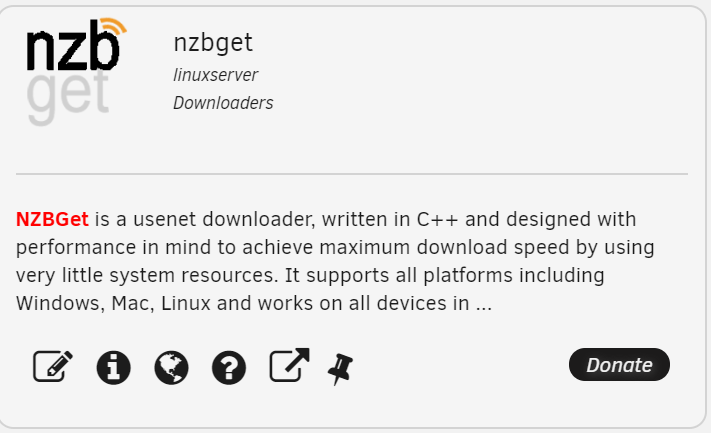
In UnRAID, navigate to Plugins and open up the Community Applications plugin (causeless to have been installed already). Search for nzbget and click Install:
Utilise the default port (6789) and fixHost Path ii to /mnt/user/Downloads/NZB and hit Done:

Once the Docker image has been downloaded and container set up, open NZBGet in your browser. You'll be prompted for a username and password which are:
- Username:
nzbget - Password:
tegbzn6789
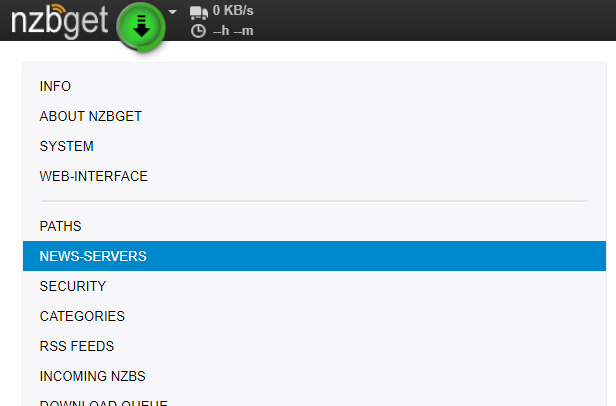
So in the top menu select Settings. So select News-Servers on the left:
Your Usenet provider should provide four essential pieces of information:
- Server accost
- Port (usually
119for unencrypted and563for encrypted) - Username
- Countersign
All three of these details were available in Newshosting immediately afterwards I joined the monthly subscription programme. Enter them in under the correct fields:
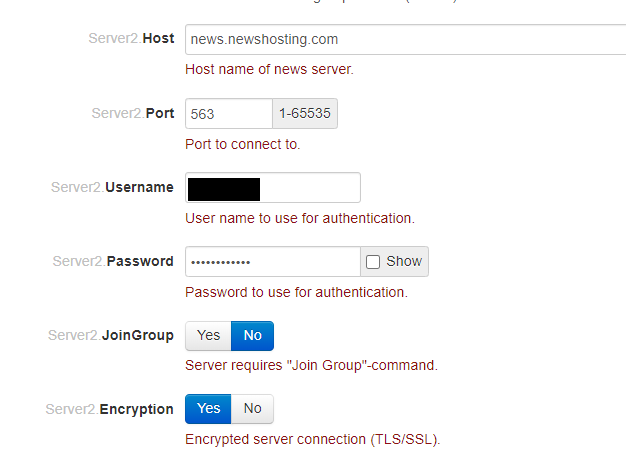
Set Encryption to Yep and change the port from 119 -> 563 if you want to encrypt your Usenet download traffic (highly recommended).
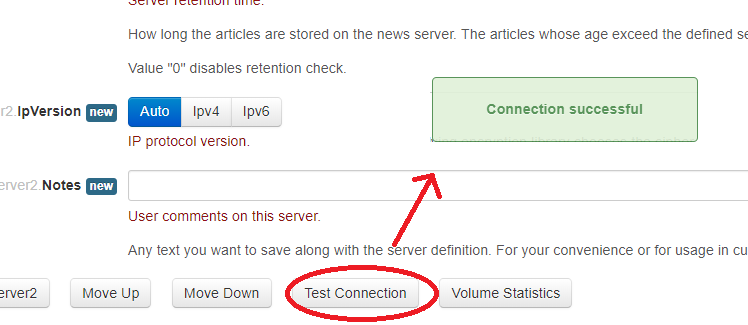
Test the connectedness and then click relieve all changes in the bottom left and you'll exist prompted to restart NZBGet. Restart and NZBGet will be all ready to utilize!
Since we're configuring both Sonarr and Radarr to work with NZBGet, nosotros need to add together 2 categories on NZBGet. Do this by going to Settings -> Categories -> Add Another Category. Enter Radarr in the Proper name field and then click Save:
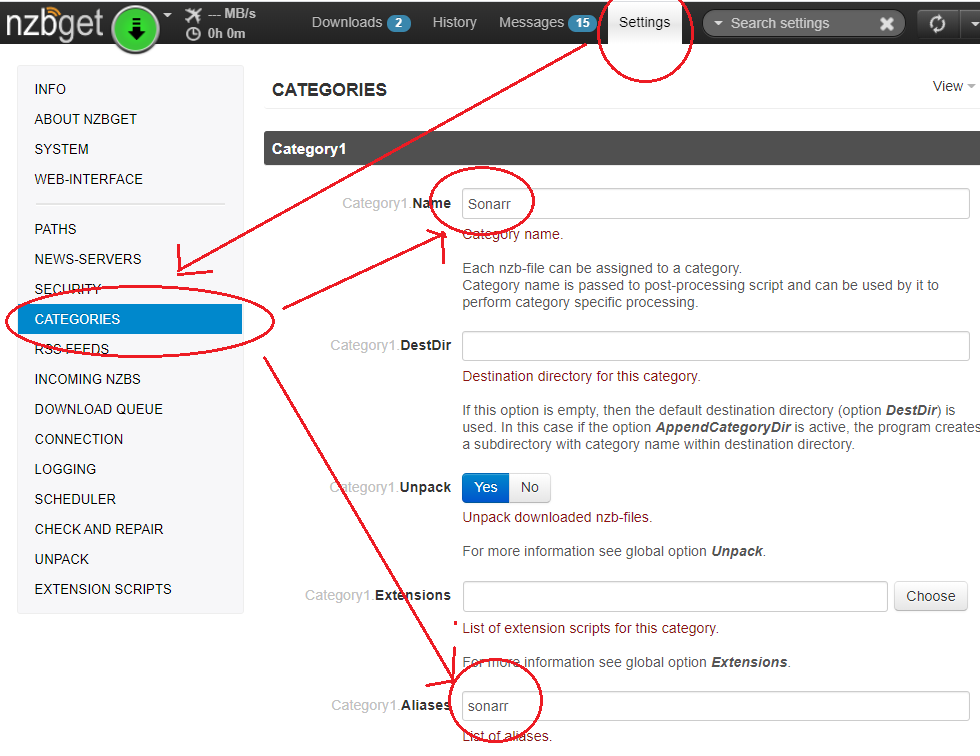
Echo this for Sonarr as Category2.
Radarr (and Sonarr) Setup
With our Usenet download client and indexer (doesn't crave setup) all fix, now we just accept to configure Sonarr/Radarr to use them.
I'll just be going through how to set up Radarr up - Sonarr volition be identical, you'll just have to repeat the steps.
Add Indexer
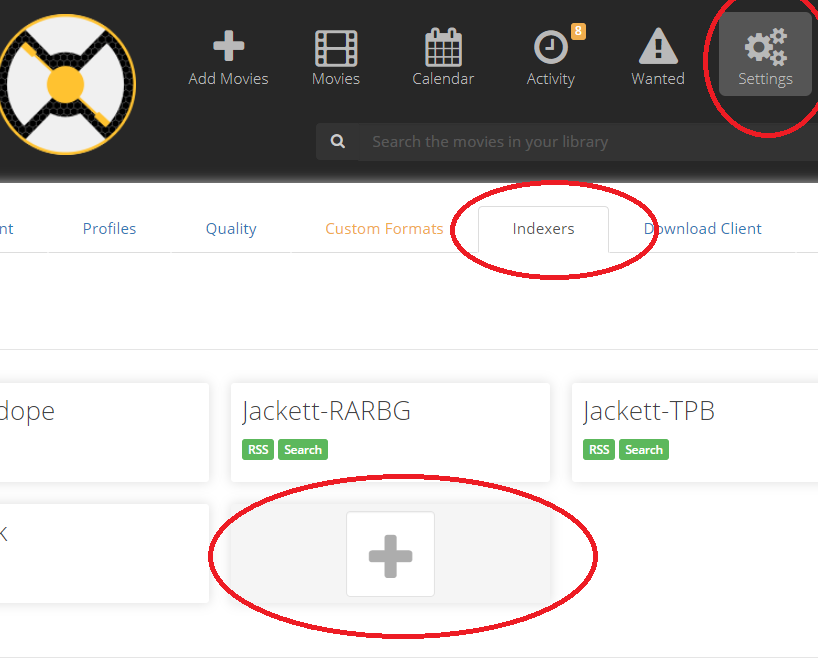
Stride one is to add the indexer. Navigate to Settings -> Indexers -> Add together Indexer (+):
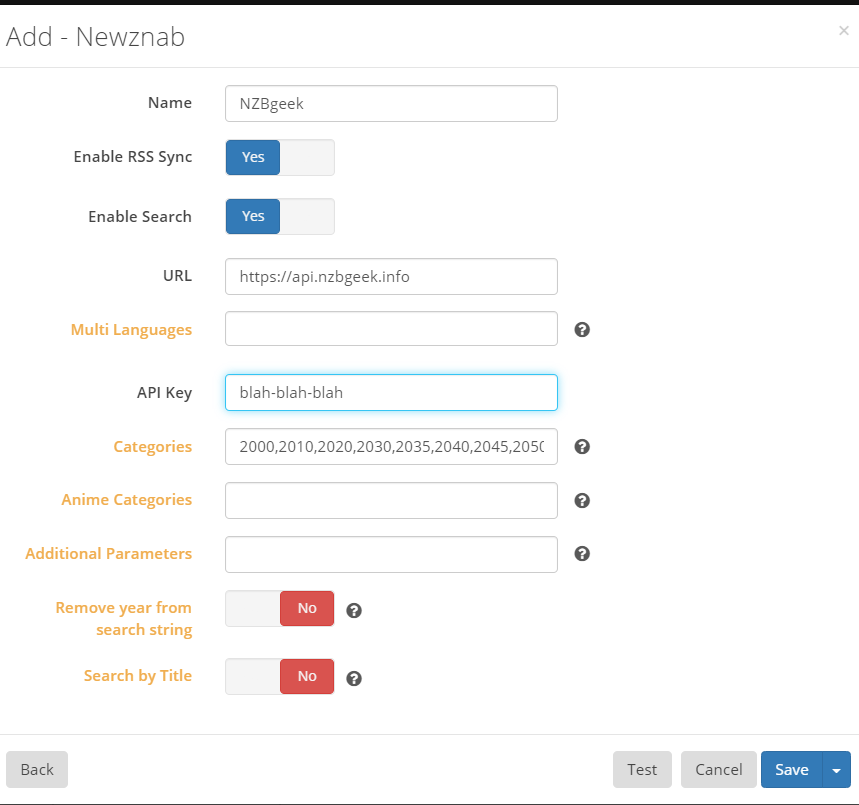
Nether Usenet -> Newznab -> Presets, find your indexer of choice (I use NZBGeek). So simply add the API Key you got from your indexer, click Test and if everything is okay, click Relieve:
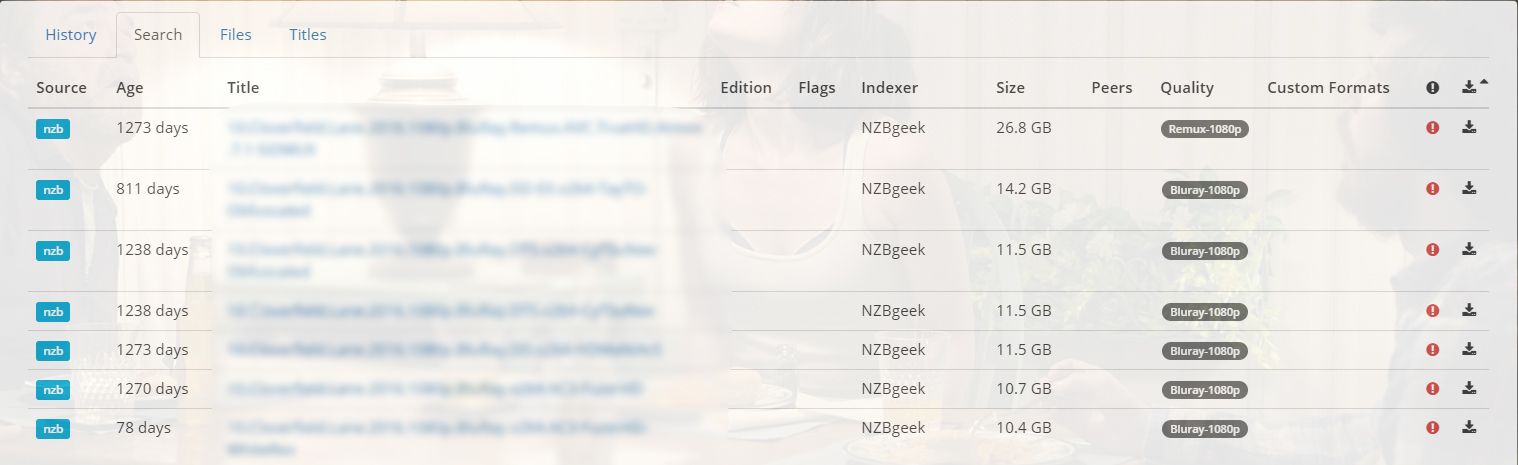
At present if you navigate to any content y'all have and perform a manual search - you will see a number of results from NZBGeek:
Add Download Client
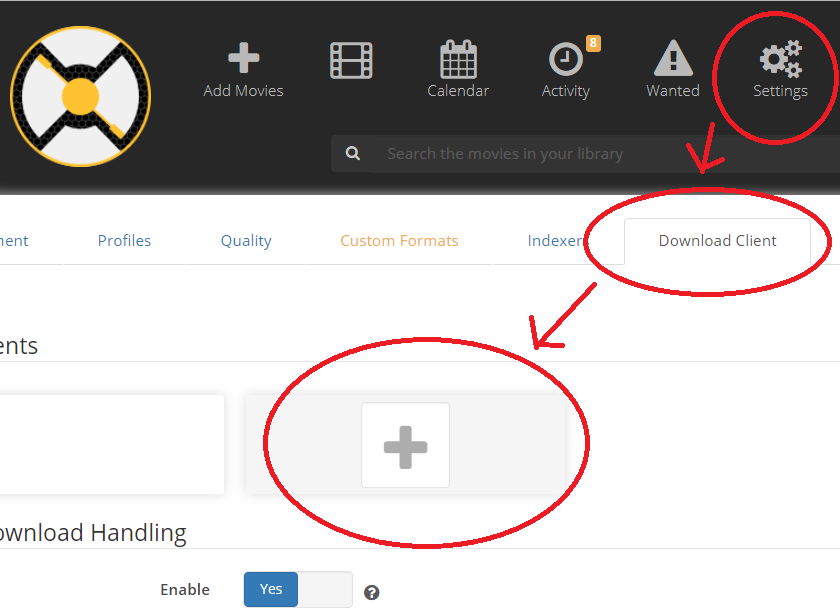
Navigate to Settings -> Download Client -> Add together new client (+):
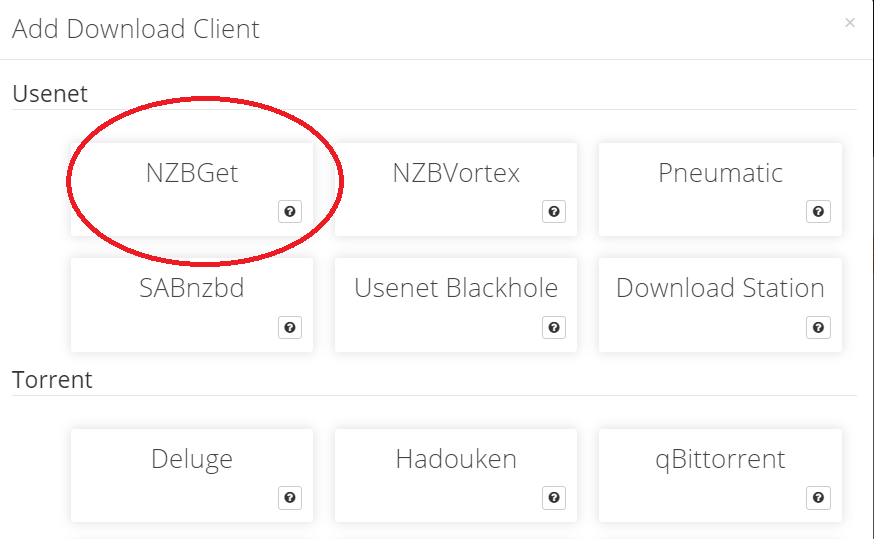
And so select NZBGet (kickoff choice):
So in the popup, add together:
- Host: IP of your Unraid Server
- Port: 6789
- Username:
nzbget - Countersign:
tegbzn6789
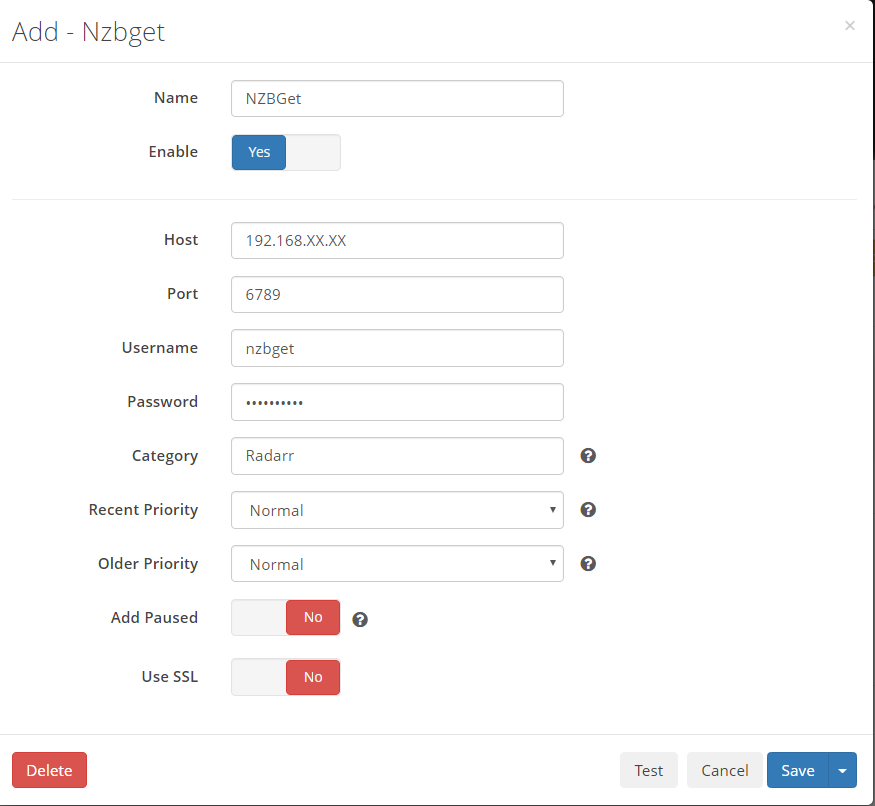
Note: you lot'll notice that Category has Radarr. If yous are setting up Sonarr, y'all need to make it Sonarr which volition map to the correct category that we added to NZBGet previously.
Exam it and if successful, click Relieve.
That'south information technology! You've setup your Usenet indexer and Usenet download client.
Note: Remember to repeat the above steps for Sonarr!
Testing it out
In Radarr, search for some new content and click Add together and Search. After a few seconds, you should see your new media file starting time downloading in NZBGet:
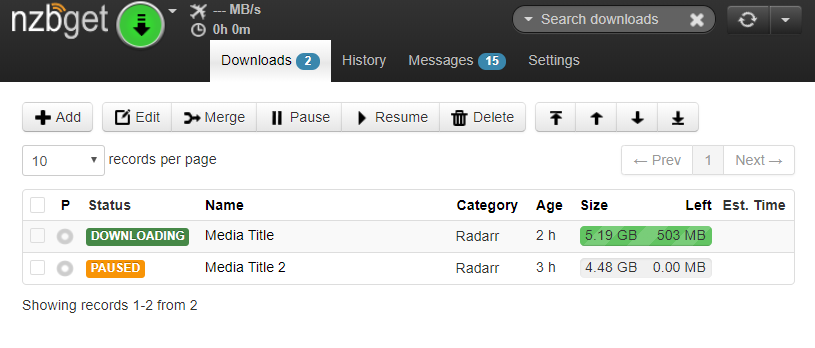
Afterward the download has complete, NZBGet will move the file to the /downloads/completed/radarr directory. Radarr volition so copy the file over to your Media directory automatically. You can and so open your Plex server, refresh your library and watch your new media content!
DOWNLOAD HERE
Posted by: delgadoprippir.blogspot.com


0 Komentar
Post a Comment